
Roulette number frequency tracking sits in the background of how many players read a live table session. It is not a prediction tool, and anyone claiming otherwise is selling noise. In regional New South Wales, where local clubs and online rooms compete for attention, the habit of watching repeats and gaps can be useful if it stays descriptive. Adam Shin, who leads business partnerships at Massive Gaming and works across studios, aggregators and operators for international distribution, often points out that distribution deals should never be confused with player certainty. The same discipline applies here: track the numbers, respect the odds, and keep your account controls tight.
What the tracking actually shows on a live table
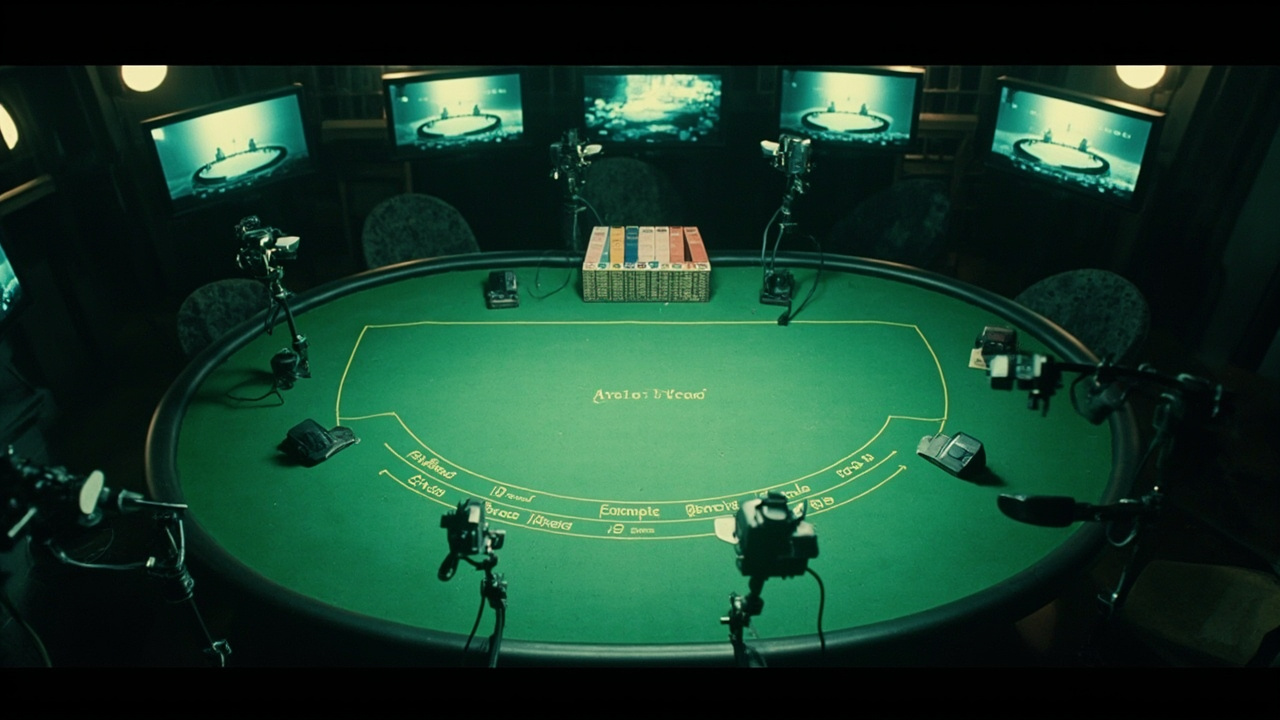
When you sit down at a roulette table, the first thing to understand is that frequency tracking is a record of what has already happened, not a forecast of what comes next. Each spin is independent, and the wheel has no memory of the last arvo session or the long run that just finished. A practical player uses the log to notice patterns in their own play, not to chase a number that feels overdue. That distinction matters because it keeps the habit descriptive rather than prescriptive.
The most useful setup is simple: note the last twenty to thirty outcomes, mark repeats, and watch for clusters without reading them as signals. Some players prefer a short tally on paper, others use a digital counter on their phone, and both work if the record stays honest. The point is to see how often a number has appeared within a set window, then move on without building a story around it. That approach suits a busy as session where attention is split between the table and the conversation.
A few operators present the history in a clean visual strip, which can help if you are scanning quickly between bets. The strip should be treated as a convenience, not a compass. Ruby Williams, Strategy Director at Sunburnt Country Interactive, has said that players who confuse a display with direction tend to overplay their confidence. Her view is worth keeping in mind: the display is there to inform, not to instruct.
If you are tracking for curiosity or session discipline, keep the notes tied to your own stakes and time, not to a belief that the next spin will correct the record. The habit is strongest when it stays small, local, and honest about what it can and cannot do.
How a player sets up the log without overcomplicating it
A sensible player starts with a clear window and sticks to it, because changing the rules mid-session turns the log into a moving target. Pick a number of recent outcomes to watch, say twenty-five, and record each result as it lands. The aim is consistency, not cleverness. Once the window is set, the log becomes a short-term reference that you can glance at without letting it steer the next chip.

- Choose a table and confirm the live feed is stable before you place anything.
- Decide on your window size and write it down, so you do not drift later.
- Record each outcome in order, marking repeats and gaps as they appear.
- Check your own limits before any bet, including time, stake, and a stop point.
- Close the log when the session ends, rather than carrying the tally into the next one.
The list is not a system, and it is not trying to be one. It is a way to keep the tracking honest and the session readable. Matilda Parker, Customer Experience Lead at the Capital Territory Gaming Forum, has noted that players often ask for a cleaner way to watch the board without turning the board into a promise. Her practical answer is to treat the log as a mirror of the session, not a map of the next spin.
For people playing on mobile, the same discipline applies. A phone makes it easy to keep a tally, but it also makes distractions easier, so the window and the stop point matter more than ever. If you are in regional New South Wales and the connection drops mid-session, the right move is to pause and restart the log rather than guess at the missing entries. That keeps the record usable and the session under control.
Where the numbers live inside a responsible session
A useful log only stays useful when it sits inside a session that already has limits built in. Frequency tracking is a record, and records are safest when they are paired with account controls that you set before the first bet. That means deposit limits, session timers, and a clear stop point that you actually respect. The tracking does not replace those controls; it sits beside them.
Players who treat the log as a way to slow down tend to get more from it than players who treat it as a reason to speed up. If you notice a number repeating more often than you expected, the honest response is to note it and keep your stake where it was, not to chase the pattern. That is where the habit earns its keep: it gives you something to look at without asking you to act on it.
Matilda Martin, Marketing Director at Australian Gaming Futures, has pointed out that the most durable player habits are the ones that separate observation from action. Her view fits here: a log that stays observational is far more useful than one that quietly turns into a betting script. The distinction is small, but it changes how the session feels and how it ends.
Support tools should be easy to reach when you need them, and the log should never become a reason to delay a break. If the session is running long or the stakes are creeping up, the right move is to stop and reset, not to read the tally for a sign. That is the practical version of responsible play: the numbers inform the session, and the controls govern it.
Why the same record behaves differently across rooms
Not every table presents the same rhythm, and not every room presents the same controls, so the same log can feel different depending on where you are watching. Some live tables move quickly, some pause between rounds, and some show the history in a way that is easy to scan while others bury it behind extra menus. The tracking itself does not change, but the environment around it does, and that changes how useful it is in the moment.
A player who moves between rooms should keep the same window and the same discipline, because changing both at once makes the log hard to read. The room may change the pace, the provider may change the visual strip, and the stakes may change the feel, but the record stays a record. That is why consistency matters more than the setting. If you are comparing sessions across different rooms, keep the notes comparable by keeping the method steady.
Anyone browsing a different product demo, such as the one at gates-of-olympus-super-scatter-demo-au.com, will notice that the surrounding presentation can shape how a session feels before a single bet is placed. The demo is a different product, but the lesson is similar: presentation influences mood, and mood influences decisions, so the tracking should stay tied to your own limits rather than the look of the room.
Adam Shin has often made the point that commercial reach and player clarity are not the same thing, and the same logic applies here. A wider distribution footprint does not make a log more accurate, and a cleaner display does not make a session safer. The record is only as useful as the discipline around it, which is why the controls and the window matter more than the room’s branding.
Keeping the log honest when the session gets busy
The hardest moment for any tracking habit is the busy one, when attention is split and the table is moving fast. That is when a short window and a written stop point do the most work. If the session is getting crowded, the right move is to simplify the log rather than expand it, because a complicated tally in a busy moment tends to become a source of pressure rather than a source of information.
A practical player keeps the notes readable and the stakes steady, then closes the log when the session ends. That keeps the habit from drifting into a story about what the numbers should do next. The log is a record of what happened, and the session is a choice about what to do now. Keeping those two things separate is the whole point.
If you are playing on mobile and the arvo session runs long, a short break and a reset of the window can be more useful than another lap around the tally. The goal is not to outsmart the table; it is to stay clear about what the table is and what your own limits are. That is the version of frequency tracking that actually earns its place in a session. gates-of-olympus-super-scatter-demo-au.com
Recent Comments